Designing instruments for observation
A look at the interface concepts guiding VITA's Catalog, Map, Session Archive, Settings, and Upgrade systems—and the principles they share.

The interface is part of the fiction
VITA's screens are not meant to sit outside the world as neutral menus. They are instruments designed by a machine intelligence that categorizes ecosystems, player actions, and ancient human remnants with equal procedural confidence.
That gives every screen two responsibilities: help the player make a clear decision and reveal something about the intelligence presenting the information.
Five systems, one operating language
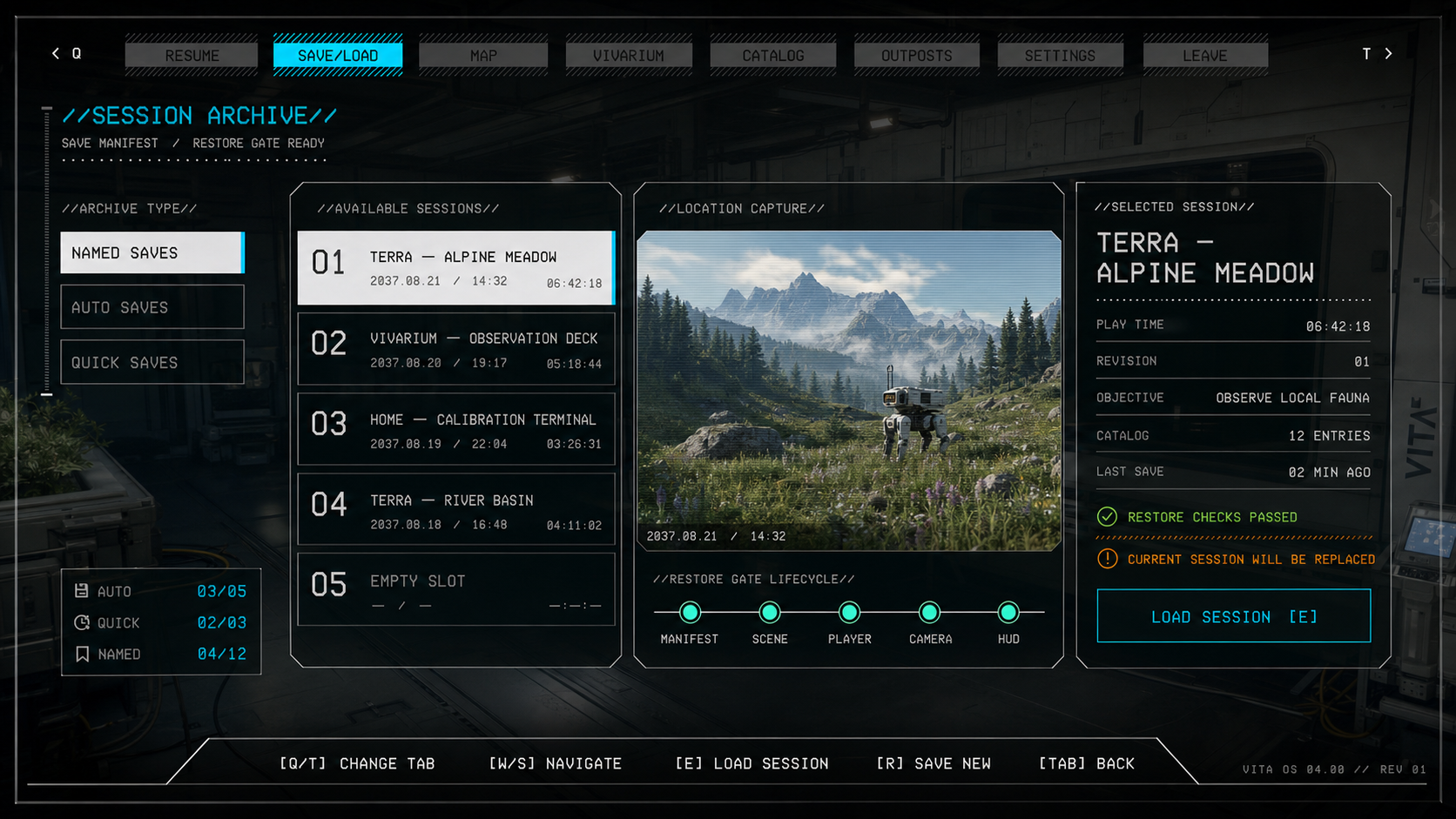
The Field Catalog treats an organism as a living record rather than a collectible card. The Survey Map layers routes, terrain, signals, and environmental conditions. The Session Archive makes restoration readiness visible before a save is replaced or loaded.
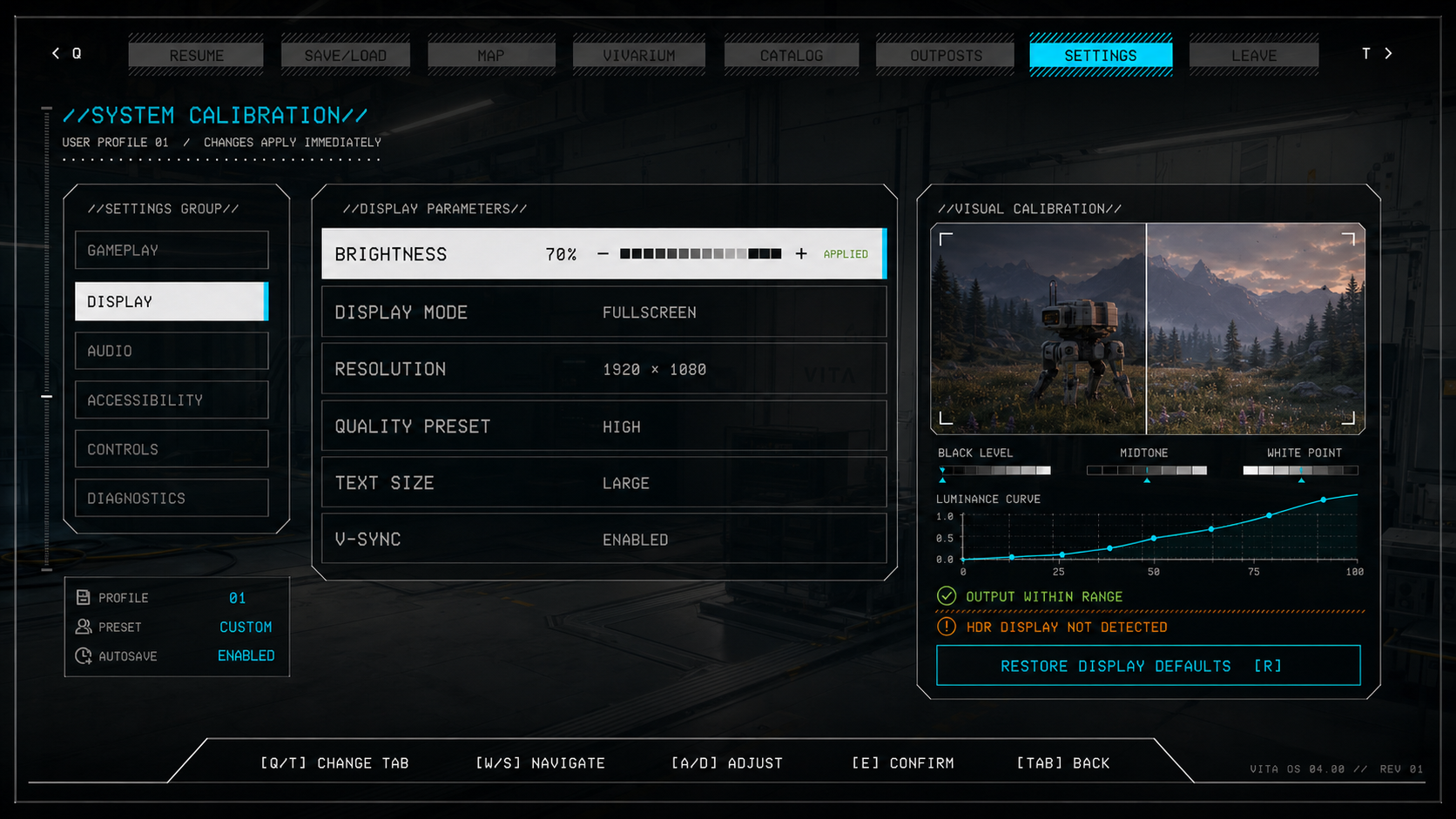
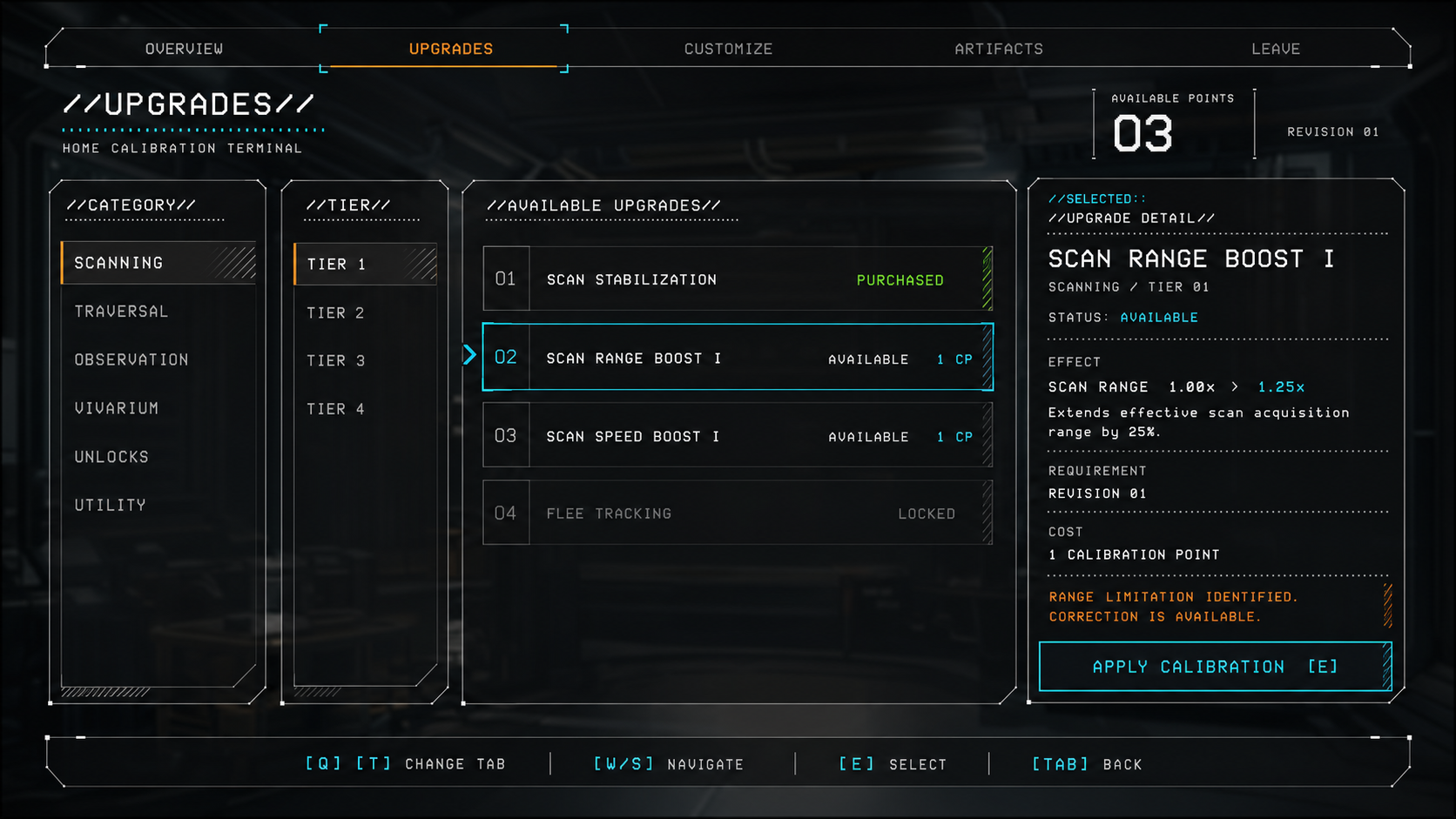
System Calibration keeps settings and accessibility inside the same visual language, while Upgrade Calibration explains costs, limitations, and requirements instead of presenting progression as a row of unexplained bonuses.
Concept is not implementation
These images establish hierarchy, terminology, navigation, and tone. They are clearly labeled as concepts because they do not prove that the corresponding runtime system is complete.
As implementation advances, Game View captures will join the concepts so the progression from intention to working system remains visible.